


A friend can remain in our hearts for a lifetime.
A friendship often belongs to a particular season.
Belonging, grief, and becoming are renewed daily.
I’ve been thinking lately about friendship ghosts.
Not the dramatic kind born from betrayal or some spectacular falling out. I mean the quieter kind.
The friends you loved deeply. The ones who slowly disappeared—not because anyone stopped caring, but because life kept moving. Priorities changed. People moved away. Careers, marriages, children, grief, healing, geography, and time quietly rearranged the landscape until one day the relationship simply wasn’t where you left it.
Most of us have spent at least a little time wondering what happened to those people.
We replay old conversations. We wonder whether we should have reached out more often. We occasionally wake up at 2:00 a.m. mentally reviewing interactions from ten years ago, convinced we’ve finally discovered the exact sentence that changed everything. Human beings are remarkably talented at trying to solve relationships that no longer have problems to solve.
The strange thing is that friendship ghosts don’t come with a funeral.
There’s no culturally recognized moment that tells us we’re allowed to grieve them. No rituals. No casseroles. No sympathy cards. Yet many of us quietly carry the loss anyway.
Maybe what we’re grieving isn’t a rupture at all.
Maybe we’re grieving the slow passage of time.
Because love doesn’t necessarily disappear. Care doesn’t evaporate. I still genuinely hope many of my old friends are living beautiful lives. I still smile when certain memories surface. In many ways, those people continue to live in my heart long after they’ve disappeared from my daily life.
The ghosting happens because shared experiences cannot remain shared forever.
Friendship grows inside the spaces where two lives overlap. It grows around common language, mutual priorities, familiar rhythms, and the version of ourselves that existed while we were living them together.
A friend can remain in our hearts for a lifetime.
A friendship often belongs to a particular season.
I’ve started wondering if that’s actually more normal than we allow ourselves to believe.
Maybe lifelong friendship isn’t about somehow avoiding change.
Maybe it’s about making room for it.
Every few years we become someone new.
People often say friendships end because people change.
I don’t think that’s true.
People are supposed to change.
Friendships struggle when we ask someone to remain who they used to be. When we insist on relating to an older version of someone, we slowly turn them into a ghost. We stop meeting the person standing in front of us and keep reaching for the one who no longer exists.
Making room for who each other become—that feels much closer to the secret of lifelong friendship.
Not loving someone for who they were.
Loving them through every chapter of who they become.
High-control communities complicate this in ways I’ve been trying to put words around for years.
Those environments are exceptionally good at creating intense and significantly contextual friendship.
I’ve heard people jokingly say friendships begin with trauma bonding. There’s no experience I can relate this to more than my friendships at the Honor Academy.
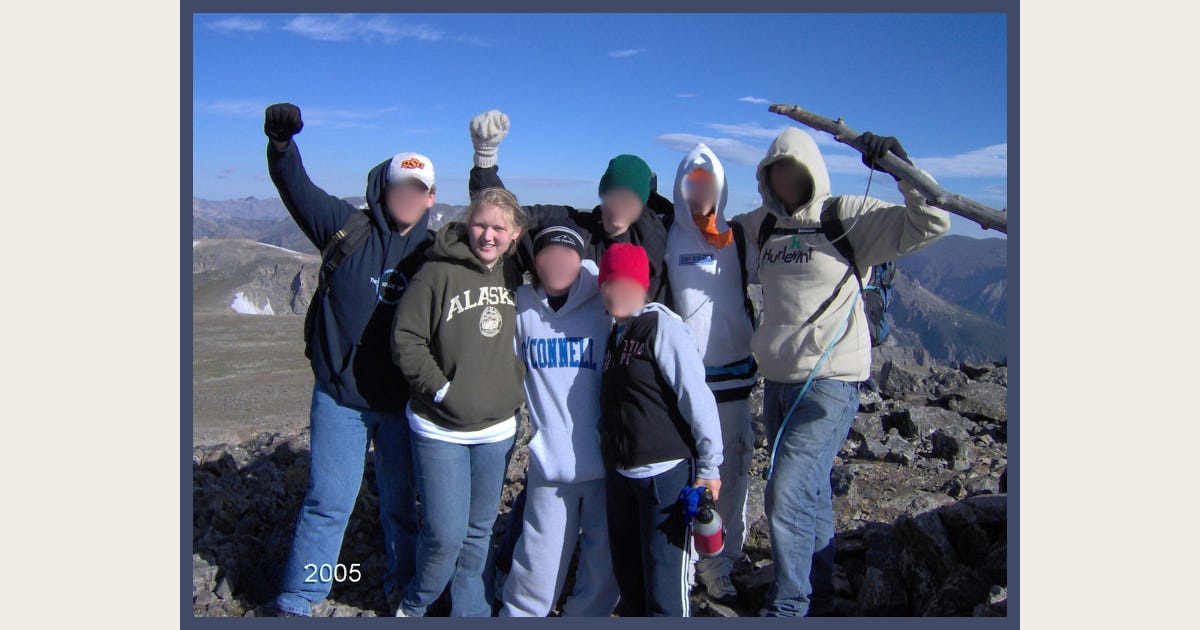
The first week together, we were summiting Hallett’s Peak. We camped at Bear Lake before traversing the ten-mile round trip with 3,200 feet of elevation gain. Having just arrived from Alaska, my hiking capabilities were above par, but that last mile of bouldering quickly revealed who I could lean on. This was an intentional bonding exercise with complete strangers, and we celebrated together from the 12,720-foot perch overlooking Rocky Mountain National Park.
We ran corporate exercise every morning and lived within brother core and sister core dynamics that became the testing ground for every expectation placed upon us.
We were petri dishes of baby organisms growing together into small colonies sent out to infect the rest of the world. As dramatic—and admittedly disgusting—as that analogy sounds, there is truth in it. Much like military boot camp breaks people down before rebuilding them, we entered a spiritual boot camp where we willingly submitted ourselves to becoming the most pristine Christian soldiers we could imagine.
And I truly could not have done it without those thirty strangers who became my family.
The flashbacks to some of my greatest moments of personal growth are inseparable from the essence of those souls. They still arrive like a cinematic highlight reel of the good old days. If this were the place to describe each of them, I would gladly try. The innocence and purity of those 365 earth turns would make any coming-of-age story jealous.
It is difficult even now to pull myself out of remembering.
To do so feels sobering.
Because it is sobering to realize that I met only a version of that family.
You take us out of the system, and we become different people. In each of our becomings, there wasn’t room to remain connected. We lost the ability to hold new versions of one another because we had first learned to know each other inside a very particular version of ourselves.
I’m sad to say it, but I don’t know that I ever truly had the chance to know them.
Sure, we practiced vulnerability. We confessed our struggles in the name of sanctification. We poured into one another because that was the language of growth we had been given. But looking back, I can see we were all living our own coming-of-age stories inside the same set of expectations.
I simply met one hundred different versions of the same avatar.
Just as they only met the version of me that existed inside a seventeen-year-old determined to change the world according to someone else’s rubric.
Oh, how I would love to meet who they have become on the other side of that context.
I barely made room for myself to become fully me, and I suspect those relationships remained in the past because I experienced them as too small to contain who I was becoming.
I’m not saying they wouldn’t have accepted me. At the time, I probably assumed that was true because I had not yet realized that the architecture of our friendships had been built on a shifting systemic foundation.
What I am saying is that the relationships themselves had been built to hold a particular version of us.
And what makes these ghosts especially painful is that, while those relationships ultimately became too small, they also contained some of the biggest moments of becoming I had experienced up to that point.
My longest friendship lasted fifteen years—well beyond our little compound of growth and into adulthood. We grew together the best we could.
But it couldn’t continue once my becoming no longer included being closeted.
Then, a few weeks ago, I got a text from her.
She sent me a screenshot announcing the 2026 Teen Mania Honor Academy reunion and asked, “Are you gonna go?”
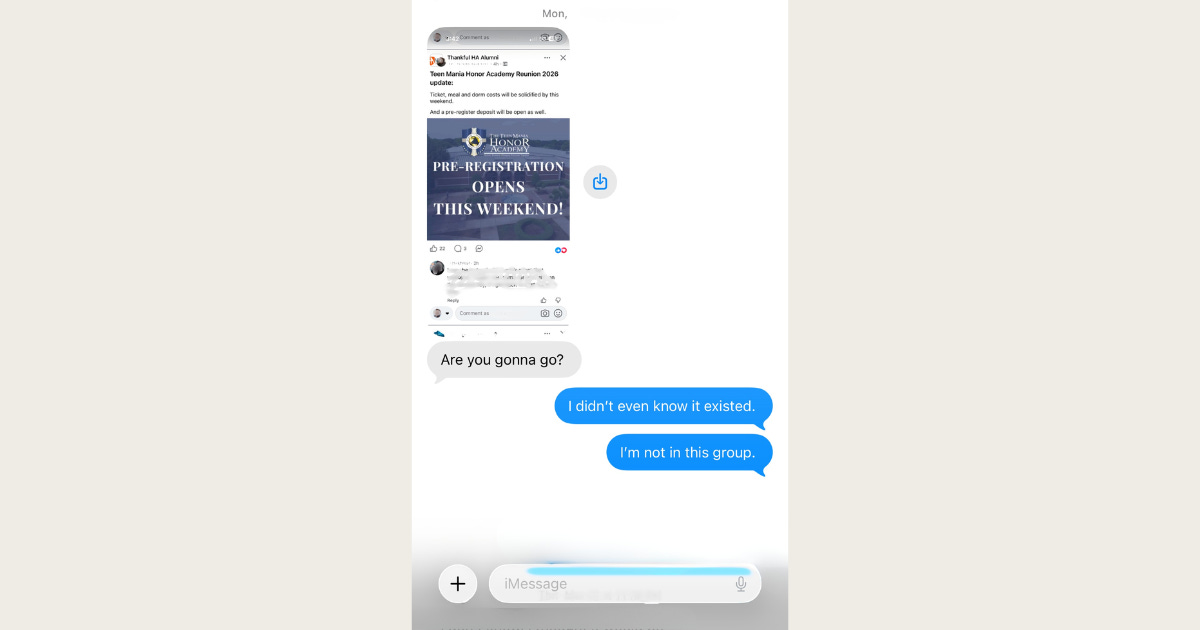
The exchange itself was brief. I told my former best friend that I didn’t even know the reunion existed because I’m not “in that group.”
The conversation ended there, much like our friendship had ended six years earlier.
But her text stayed with me.
Not because I found myself wondering whether I should attend.
Because it made me wonder what reunions like this are actually inviting us to reconnect with.
Like many communities built around high-control systems, former participants have spent years making sense of the same experience in profoundly different ways. This particular reunion was originally being organized by the self-described “Thankful Alumni,” a community that explicitly distinguishes itself from those who have come away with a very different understanding of what happened there.
A few days later, an email from Ron Luce landed in my inbox.
Its invitation was simple.
Reconnect. Celebrate. Remember.
As I stared at those three words, I realized I wasn’t asking whether I wanted to kick around the red clay in East Texas for a weekend and recalibrate my nervous system.
I was asking something much more difficult.
Who, exactly, was I being invited to remember?
The seventeen-year-old who believed she was changing the world?
The friends I loved with my whole heart?
Or the identities that none of us had freely chosen?
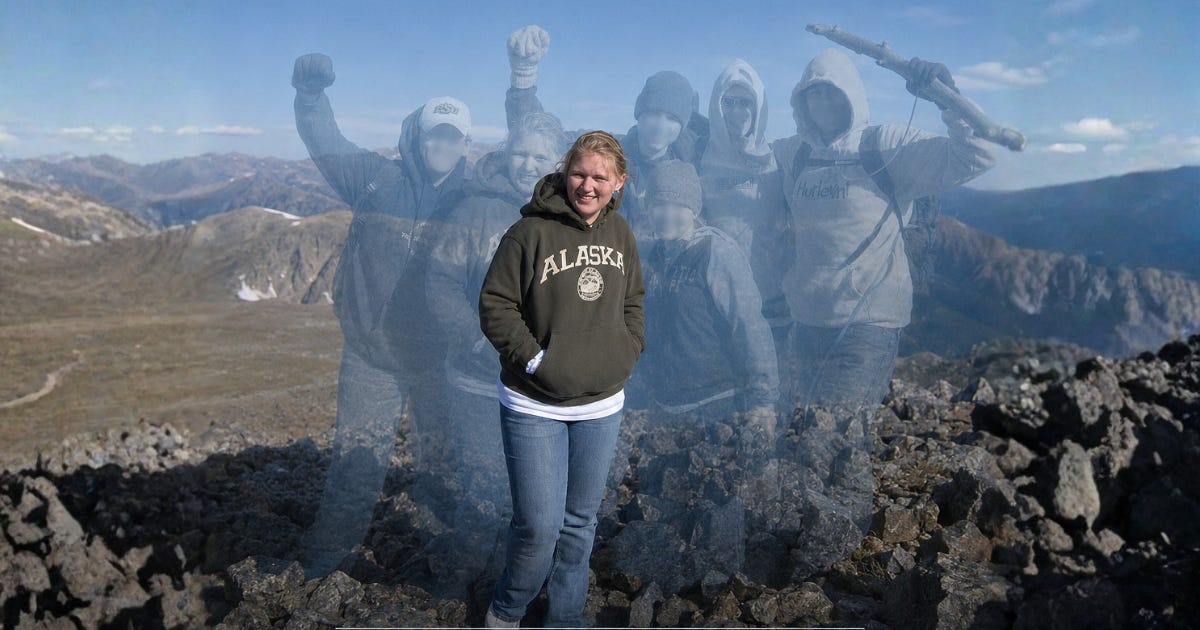
Maybe what makes ghosts painful isn’t that they disappeared.
It’s that we keep expecting them to be waiting where we left them.
A reunion can’t bring back who we were because those people no longer exist.
The better question isn’t whether I should go.
It’s whether there’s room for us to meet each other as strangers who have spent twenty years becoming.
I’d love to meet those people.
Not the teenagers who climbed mountains convinced they were going to save the world.
The people who survived becoming themselves.

If friendship ghosts are people we can no longer be held in space and time, there is another ghost in this story.
The seventeen-year-old who never got the chance to fully emerge.
The reunion invites me to remember her.
My grief invites me to meet her.
Maybe every friendship ghost leaves us with two unanswered questions.
Who did they become?
And what relationship do I have now with the person I was when those friendships were made?
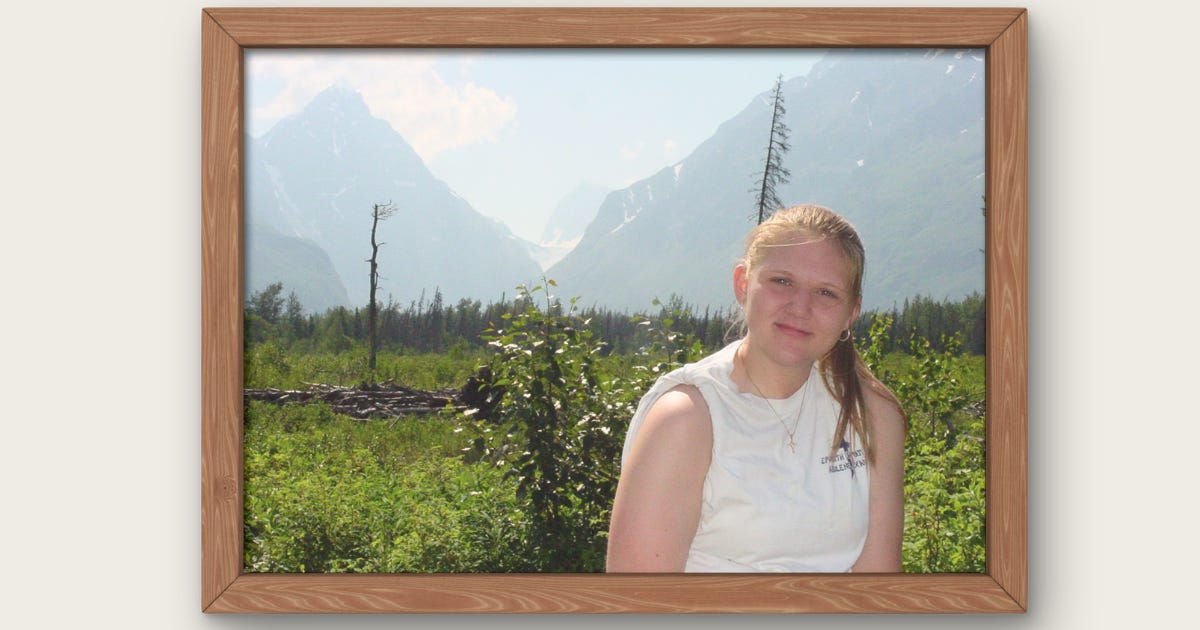
Flourishing Exvangelical is a space for integration, self-trust, and nourishing life beyond high-control systems. — Jillian
I’m a therapist and writer exploring how people live with more ease, integrity, and belonging after old frameworks no longer fit. Through reflection, language, and gentle inquiry, I offer space to make sense of what lingers and to orient toward a life that feels more your own.
Keep becoming. Your growth is sacred.
🌿
If something here resonated, you’re welcome to engage with it, return to it, or share it with someone who might need the language.
Looking for more?
I offer therapy for those holding religious trauma in the state of Virginia and I offer integration coaching worldwide. The place to stop for therapy is Seek Anchor and the place to find me for coaching is jillianhoughton.com.
If you’ve found value in this content, help me plant the seeds for more by buying me a coffee! Your support helps grow this space and nourish the next post. ☕️🌱
I wonder sometimes whether those connections could ever be rebuilt, or if the versions of us that existed inside the system were the only ones who could have been that close.